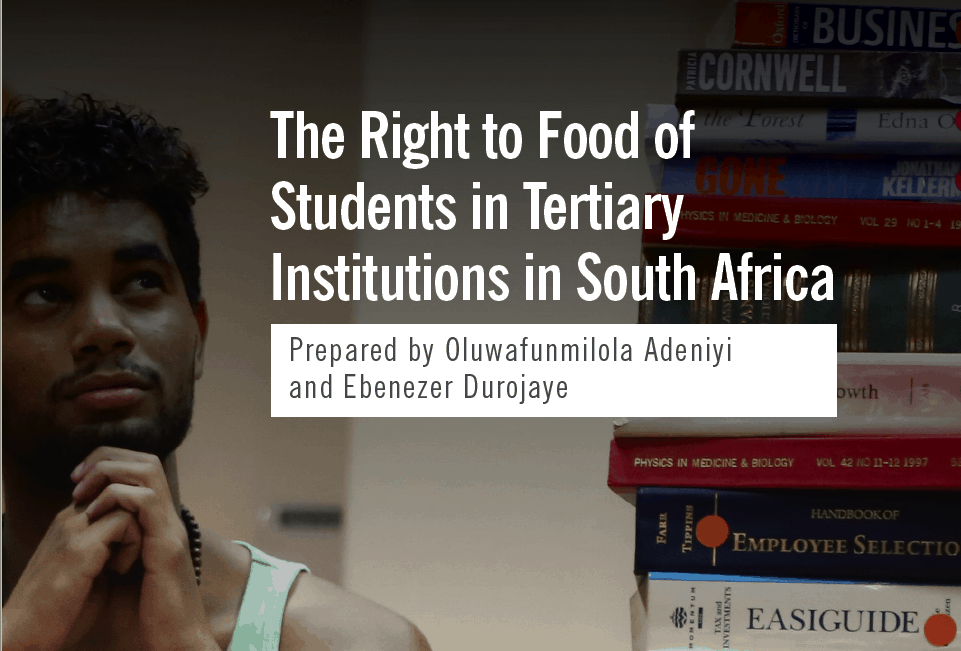
The right to food in South Africa is recognised and guaranteed in various laws at the international regional and national level.
The right to food in South Africa is recognised and guaranteed in various laws at the international regional and national level. Access to adequate food is a serious challenge across the globe, leading to hunger and malnutrition. Currently, 1 in 8 people worldwide go hungry every day. In 2015, the international community adopted the Sustainable Development Goals (SDGs), the second of which is to end hunger by 2030 and ensure that no one anywhere in the world is hungry or malnourished. Although South Africa is striving to meet the SDGs, hunger remains pervasive, with millions of people in the country suffering daily from hunger. Food insecurity is a reality for many, all the more so for vulnerable groups.


related Publications
Ilungelo lokufumana ukutya lilungelo eliqinisekileyo kuMgaqo-siseko womMzansi Afrika.
Ilungelo lokufumana ukutya lilungelo eliqinisekileyo kuMgaqo-siseko womMzansi Afrika. Kwaye inzululwazi nophando zincedisa ukukhusela eli lungelo. Wonke umntu unelungelo lokuba nokutya okwaneleyo nokune sondlo. Inzululwazi (science) incedisa ama-Fama ukuze akhulise isivuno sawo ngcono, kwaye ulwazi nophando olwenziweyo (research) luncedisa iintsapho ukuba zitye ukutya okungcono. Ulwazi lunceda abahlali bamanyane kwaye babe namandla. ...
Jou reg tot voedsel is ‘n mensereg.
Jou reg tot voedsel is ‘n mensereg. Wetenskap en kennes help om hierdie reg te beskerm. Elke mens het die reg tot veilige en gesonde voedsel. Wetenskap help die boere met beter kennis en navorsing om gesinne beter te laat eet. Kennis hou gemeenskappe sterk. Die DSTI-NRF Centre of Excellence ...
Your right to food is a human right.
Your right to food is a human right. Science and knowledge helps to protect that right. Everyone deserves enough safe and healthy food. Science helps farmers grow better crops, and research helps families eat better. Knowledge helps communities stay strong. The DSTI-NRF Centre of Excellence in Food Security (CoE-FS) works ...