African Food Systems Transformation Collective Brief Series 10: Urban Food Environments
The purpose of this brief is to take stock of the variety of urban food environment initiatives underway across Africa and compile these into an actionable menu of investment opportunities. The brief outlines the rationale for increased investment focus into urban food environments to guide strategic operational discussions on how and where investment can have the greatest catalytic impact.
Key messages
The messages highlighted in the brief are:
- Given Africa’s rapid urban growth trajectory, cities must act now to establish the policies, infrastructure and cultural frameworks necessary to create healthy food environments and prevent long-term path dependencies in urban food systems
- Clear pathways exist for investing in diverse actions for food environments
- The impact of these diverse actions could be leveraged through support for overarching coordination
- There is a current funding gap of US$100 million that could be deployed into existing initiatives over the next five years.
African Food Systems Transformation Collective Brief Series 09: Pan-African and Regional Trade and Policy for the Food Systems Transition
The links between trade and food security and nutrition are inherently complex yet undeniably affect the six dimensions of food security: availability, access, utilisation, stability, sustainability and agency (High Level Panel of Experts on Food Security and Nutrition (HLPE) (2020). Reforming regional and pan-African trade and policy for the agroecological transition must therefore shift from policies that promote uniformity under the influence of the industrial agriculture model and the green revolution to embrace food sovereignty and diversity (International Panel of Experts on Sustainable Food Systems (IPESFood) 2016), from global supply chains to localisation and territorial markets (Abrego et al. 2020). Territorial markets are food distribution systems directly linked to local, national and/or regional food systems. They are typically organised horizontally among various stakeholders. Significantly, within their respective territories, they also serve multiple functions beyond mere food supply – economic, social and cultural – and are often most remunerative for smallholder farmers. Evidence suggests that the role of territorial markets in strengthening local food systems and entrenching the right to food is gaining prominence. Recently, the second Agroecological Entrepreneurs and Territorial Markets Convening organised by the Alliance for Food Sovereignty in Africa (AFSA) was successfully held in Harare in September 2024, demonstrating an emergent agroecological transition (AFSA 2024; Muigai et al. 2024). Conversely, adherence to neoliberal orthodoxy means that customs procedures, taxes, permits and administrative trade costs, among other vestiges of trade, continue to be maintained to deliver the promise of the African Continental Free Trade Area (AfCFTA). The AfCFTA is an arrangement between member countries that aims to create conditions for the free flow of trade among them, in which there are no import tariffs; that is, taxes on imported goods or any other barriers on imported goods from members of the same free trade agreement (African Export–Import Bank 2024; United Nations Economic Commission for Africa (UNECA) 2023; Bonuedi et al. 2020). If overcoming tariff and non-tariff barriers and narrowing the divergence between food-related provisions of regional economic communities can be integrated with efforts to promote agroecology and prioritise territorial markets and food sovereignty, then Africa could be on its way to addressing its food, health and environmental crises. Bridging the gap between these two narratives is crucial to ensuring food sovereignty, the right to food, and that the food systems transition to agroecology indeed takes place (Narula 2024; Owasa & Kabaseke 2024; Fakhri 2021). Philanthropy can play a catalytic role in shaping trade measures and policies that ensure food security for sustainable food systems by providing financial resources, expertise and advocacy to support progressive movements such as the AFSA in challenging an entrenched industrial, capital-intensive food system that is controlled by a limited number of dominant multinational corporations and facilitated by the globalisation and financialisation of food systems (Narula 2024; Elver 2023). Philanthropy can also help bridge existing gaps between research, practice and policy, ensuring that trade policy, tariffs and nontariff measures that act as barriers to trade are aligned with ecological sustainability, social equity and economic resilience. By fostering innovation, collaboration and systemic change in trade, philanthropy can play a crucial role in transforming African food systems for a more sustainable and equitable future.
African Food Systems Transformation Collective Brief Series 08: African Indigenous Foodways
- African Indigenous Foodways (AIFs)1 offer a sustainable alternative to industrialised agriculture, promoting food sovereignty, biodiversity conservation and climate resilience. AIFs are rooted in traditional knowledge and practices, adapted to local environments with minimal external inputs.
- Knowledge co-creation and sharing are crucial for advancing AIFs. This involves collaboration between farmers, researchers and other stakeholders to develop and disseminate practical, locally relevant agroecological knowledge. Networks and platforms play a vital role in facilitating this exchange.
- AIFs align with agroecological principles, contributing to food and nutrition security (FNS) and cultural preservation. They empower local producers, including smallholder farmers, wild harvesters, fishers and pastoralists, while responding to the complex, interconnected polycrisis of food security and health, livelihoods poverty and inequality, and climate change and environment.
- Transitioning to AIFs requires policy support, funding mechanisms and regional collaboration. Initiatives like seed festivals, national dialogues and agroecological farm projects demonstrate the potential for scaling up AIFs across Africa.
- Philanthropy can play a significant role in supporting AIFs by funding knowledge co-creation initiatives, empowering local community-based organisations, and promoting policies that protect biodiversity and reduce corporate influence in food systems. This support is crucial for building resilient, equitable and sustainable food systems capable of feeding Africa’s growing population while mitigating climate change impacts.
African Food Systems Transformation Collective Brief Series 07: Agroecological Territories and Integrated Landscape Approaches to Advancing Food Systems Transitions in Africa
Africa faces deep interconnected and systemic socioeconomic and environmental challenges. Formal economic activity tends to be extractivist, causing biodiversity loss, land degradation and water and soil pollution. Integrated responses are required if effective and restorative natural resource management (NRM) and sustainable agricultural production are to be implemented. The core framing for the briefing is ‘agroecological territories’ that comprise three domains: the adaptation of agricultural practices, the conservation and sustainable use of biodiversity, and the development of embedded food systems. Key emerging approaches include agroecology, agroforestry, integrated landscape management, territorial markets and participatory multi-actor platforms and systems of governance. There is evidence of positive environmental and socio-economic impacts arising from these approaches. Key constraints to their realisation include limited financial and material resources, knowledge and skills, institutional and policy support, adverse environmental conditions, and social and cultural factors. The recommendations for priority funding include shortand long-term support for the emerging practices and integration in wider participatory and multidisciplinary NRM; diverse local markets for fresh produce and participatory guarantee systems; participatory action research for gaining a deeper understanding to inform practice and to monitor and measure impacts; capacity development of technical content and processes, especially targeting practitioners, women, youths, extension officers and local authorities; the promotion of farmer field schools and other peer-to-peer learning exchanges; processes of policy development; and comprehensive monitoring and evaluation (M&E) and communications to track, package, and share results and lessons.
African Food Systems Transformation Collective Brief Series 06: The Status of Food Storage, Transport and Logistics Infrastructure in Africa: Experiences from Uganda, Kenya and Ghana
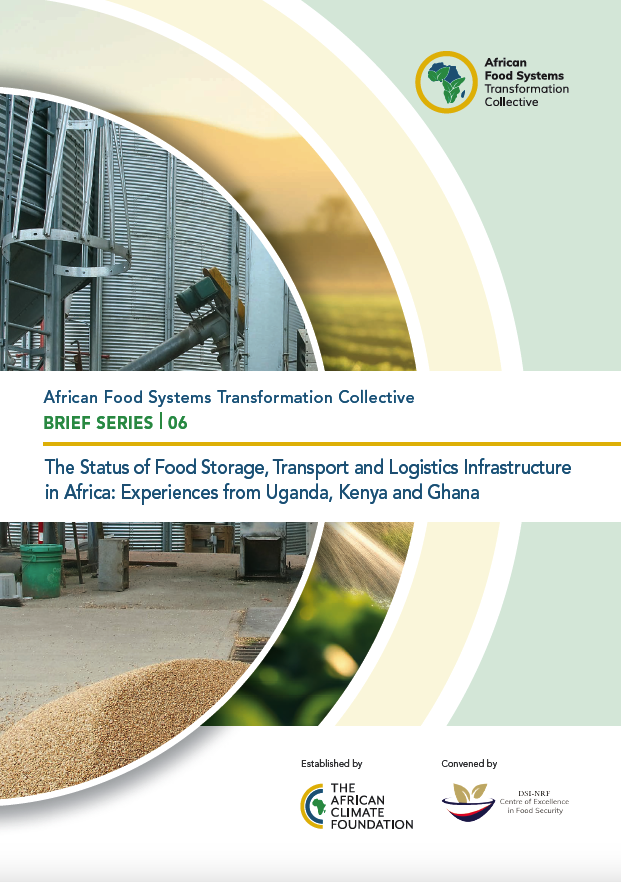
Food systems are critical to many African economies but face significant challenges due to underdeveloped or non-existent food storage, transport and trade infrastructures. This results in high post-harvest losses, inefficient supply chains, health hazards and limited market access for farmers – problems worsened by climate change. Integrating storage, transport and trade practices through agroecological transitions can enhance food security, reduce waste and support sustainable food systems, which would align them with sustainable development goals (SDGs). Smallholder farmers in rural areas rely on efficient local storage, intermediate transport and simple logistics systems to access markets, generate income, and improve livelihoods. Agroecological transitions empower farmers, boost productivity and promote economic growth. Climate-resilient practices, such as agroforestry and crop diversification, enhance resilience to climate shocks. These transitions also emphasise social equity by empowering local communities, preserving indigenous knowledge systems, and resolving poverty, inequality and land-tenure issues. Agroecological transitions in Sub-Saharan Africa – particularly in Uganda, Kenya and Ghana – should focus on food-storage improvements, efficient transportation networks and sustainable trade infrastructures. Food storage improvements aim to increase food security and reduce food waste. Food transportation focuses on efficient distribution networks based on intermediate transport that reduces emissions and connects local producers with markets. Stakeholders all play vital roles in the supply chain; they include government bodies, private-sector companies, non-governmental organisations (NGOs), farmers, transporters, academics, researchers, and traders. Efficient local infrastructure enhances productivity, food security and public health. Investments in modernising storage facilities respond to challenges such as outdated technology and climate impacts. Collaborations among governments, the private sector, and local communities reduce post-harvest losses and strengthen local food security. Philanthropic support for local infrastructure aligns well with the goals of alleviating hunger, reducing poverty, improving health, promoting sustainability and advancing social equity. Investments in intermediate transport facilities (motorbikes, ‘tuk-tuks’ and bicycle taxis) and community storage infrastructure such as granaries and warehouses can lead to transformative changes, which improve lives and set a model for sustainable development.
African Food Systems Transformation Collective Brief Series 05: Livestock Production: The Catalytic Potential of Africa’s Livestock Sector
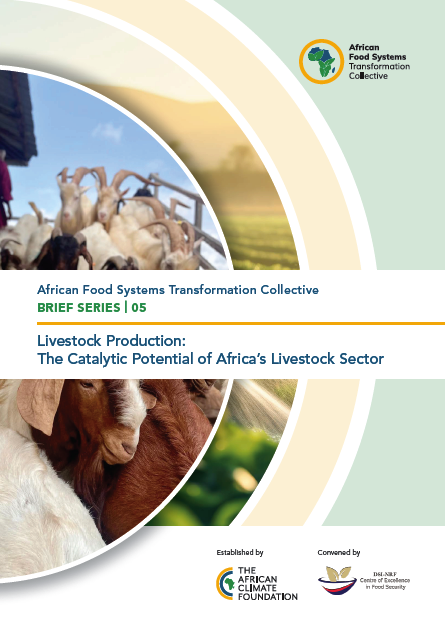
- Sustainable livestock production is critical to Africa’s economies and food systems, contributing to GDP and food security.
- Rising incomes and population growth are increasing demand for livestock-derived food, placing pressure on producers to adopt industrial production models.
- The industrial model has negative environmental impacts, is a major source of greenhouse gas emissions, and marginalises smaller stakeholders by focusing on formal market value chains.
- Investment often overlooks the multifaceted role of livestock, prioritising projects over building institutional frameworks and infrastructure, post-production services over primary production, and commercialisation over enhancing existing systems.
- Philanthropic investment can support the sector by building climate resilience, investing in low-tech solutions for pests and diseases, linking producers to appropriate markets, developing infrastructure, and influencing policies for sustainable livestock production.
Africa, home to 85% of the world’s livestock keepers, relies on livestock for food security, livelihoods, ecological health and national gross domestic product (GDP). Livestock production is mainly driven by pastoralists, agro-pastoralists and small-scale farmers in low-input, rainfed systems. This brief highlights sustainable livestock improvements in Africa, focusing on agroecological approaches that boost diversity, efficiencies and circular economies. Rising demand for livestock products in Africa requires a three- to four-fold increase in production. Industrial production models are, however, unsuitable for Africa’s low-input systems and exacerbate poverty and ecological issues. Supporting existing low-input agroecological systems by overcoming common challenges could enable a regenerative base for livestock producers in Africa. Challenges include limited access to land and water, forage shortages, animal health issues and marginalisation in policies. External drivers like market concentration and climate change, along with cross-cutting issues like gender and resource conflicts, complicate the landscape. Sectoral funding is often inadequate or misdirected. Philanthropic funding could play a key role by supporting investments into integrated animal health and rangeland management, enabling governance systems and appropriate research and market development within an agroecological framework that respects local contexts.
African Food Systems Transformation Collective Brief Series 04: Harvesting Change: Innovative Strategies for Delivering Food Systems Adaptation Finance for Local-level Impact
The impact of climate change on Africa’s food systems is profound. Rising temperatures, extreme weather events and irregular rainfall patterns are reducing food production, raising food costs, increasing food and nutrition insecurity, and decreasing job opportunities across the continent. Small-scale farmers are particularly vulnerable to seasonal climate variability, including droughts and floods. This vulnerability is even more pronounced among rural women and girls due to gender-specific constraints and a lack of resources to adapt to climate change (Pirelli et al. 2024). Given that the agrifood sector in Africa accounts for more than 50% of the total employment (World Bank 2024), and contributes about 17% to the overall continental GDP compared to a 4% global average (World Bank 2024), adapting to climate change impacts on food systems is imperative. However, the gap between adaptation finance for developing countries and their needs continues to widen, with Africa facing particularly low access to international climate finance. Africa received approximately 20% of global adaptation finance in 2021-2022, which is a disproportionately low share considering the projected impacts of climate change (GCA and CPI 2023). Africa is projected to receive USD195 billion by 2035 at the current pace of adaptation finance flows. However, the total adaption financing needs could be as high as USD1.6 trillion, over eight times higher. The agriculture, forestry, and other land use (AFOLU) sector has the highest adaptation finance needs in Africa (GCA and CPI 2023). In light of the importance and urgency of adapting to climate change, it is positive to see recent global initiatives, such as the COP28 UAE Declaration on Sustainable Agriculture, Resilient Food Systems and Climate Action, underlining the need to scale up adaptation to support sustainable agriculture (COP28 2025). However, the limited mobilisation of climate adaptation finance is only one of several pressing challenges: the limited funds are not sufficiently dedicated to and absorbed at the local level and have not sufficiently translated into better outcomes on the ground. Research conducted over the years has put the portion of global adaptation finance intended for the local level and to enhance the agency of local actors at between 10 and 20%. Based on recent estimates, a meagre 17% of total adaptation finance allocated between 2017 and 2021 was reported for climate change adaptation projects specifically targeting local communities (UNEP 2023). Amidst mounting pressure for equality, accountability and justice in climate finance, and the sluggish progress on food systems adaptation, there have been increasing calls for localisation of climate finance management and the need to effectively deliver impact to the local level. This call is supported by growing evidence of the success of locally led development beyond the food and agriculture sector (Devex 2024; OECD 2023). Yet little progress has been made, as the tendency to overlook local realities and contextual nuances in adaptation finance remains prevalent (OECD 2023). Externally driven agendas and initiatives lacking in appropriateness and local buy-in continue to dominate. While innovative finance mechanisms such as blended finance, and technological innovations such as artificial intelligence and blockchain, could help address the gap in local-level food system adaptation financing, creative strategies to reconfigure the role and approach of donors and philanthropic funding agencies are also required. Progress in channelling adaptation finance for food systems to the local level will not only be an issue of scaling up finance, but more about the careful design of the governance and administration mechanisms of such financing to allow for equitable allocation, subsidiarity and local ownership.
African Food Systems Transformation Collective Brief Series 03: Leveraging the Water–Energy–Food Nexus to Support Agroecological Transitions
African food systems are characterised by numerous challenges ranging from unsustainable agricultural practices to environmental degradation and persistent food insecurity. Despite widespread recognition of the need for transformation, large-scale investments continue to reinforce harmful industrial food system models, including monocropping, chemical-intensive farming, and extractive market structures. To break this trajectory and foster resilient, equitable food systems, a strategic shift towards agroecology is imperative. Agroecology offers a science-based, socially just alternative that integrates ecological principles with food sovereignty and equity. However, scaling agroecology remains difficult, as many promising initiatives remain fragmented, underfunded and confined to small-scale projects. Shortterm, project-based funding cycles further limit their ability to drive systemic change. Philanthropy has a critical role to play in overcoming these barriers. With its capacity for long-term, flexible and risk-tolerant funding, philanthropic investment can catalyse agroecological transitions by filling financing gaps, supporting innovation and strengthening networks that scale successful models. This brief presents the Water–Energy–Food (WEF) nexus as a strategic framework for integrating agroecology into broader sustainability efforts. By aligning agroecological initiatives with WEF priorities, philanthropy can unlock new financial and technical resources to accelerate food system transformation. The WEF framework allows crosssystem dependencies and trade-offs to be made more clearly visible, highlighting the social and environmental implications of decision-making processes. Drawing on literature and case studies, this brief highlights how philanthropic organisations can leverage their resources to mainstream agroecology, bridge policy silos and drive systemic change towards sustainable, resilient African food systems.
Key recommendations for philanthropic action
1. Support policy integration: Advocate for and fund initiatives that mainstream the WEF nexus within policy frameworks to foster cross-sectoral collaboration, incentivise sustainable agroecological practices and highlight trade-offs.
2. Strengthen capacity building: Invest in farmer training programmes that promote agroecological techniques optimising WEF nexus interactions, enhancing resource management and empowering local communities.
3. Enhance research and innovation: Provide sustained funding for research on agroecology and the WEF nexus, prioritising local innovations and Indigenous knowledge to bridge knowledge gaps and inform evidence-based decision-making. 4. Promote territorial and ecosystem-based approaches: Support initiatives that enable stakeholders to address WEF challenges within specific local contexts, fostering place-based, inclusive solutions for sustainable food systems.
African Food Systems Transformation Collective Brief Series 02: Gender and Women in Agroecological Transition
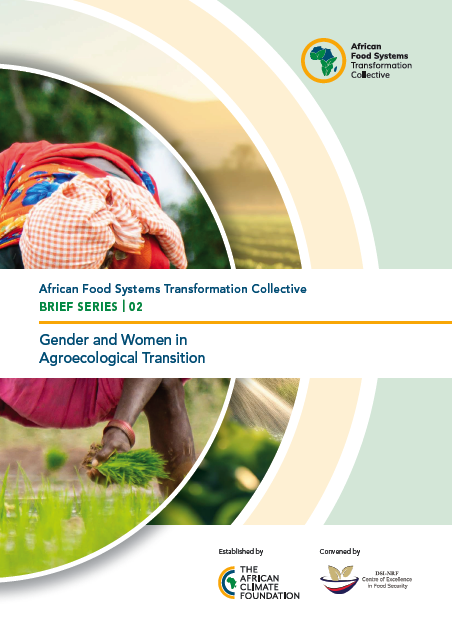
Smallholder agriculture accounts for almost 80% of food production in sub-Saharan Africa (SSA). Most of the food produced is consumed with little processing or value addition that can increase income and provide better livelihoods. However, the agricultural sector is negatively impacted by climate change, threatening the region’s food supply across the different nodes of the food value chain. Women play crucial roles in the region’s agrifood systems – from production to agribusiness – shouldering a disproportionately higher burden of climate change amidst limited access to critical resources. Yet, women receive little support, even with the development of regional trade policies on the continent. The focus on industrial agriculture in Africa contributes to unsustainable practices that exacerbate social inequalities and increase environmental degradation, further reducing productivity and increasing hunger. Agroecology offers a viable alternative that can mitigate these negative impacts by enhancing biodiversity, improving soil health, building resilience and food sovereignty, and reducing dependence on harmful chemical inputs. In addition, agroecology can also increase income for farmers through green businesses that reduce environmental footprints. Nonetheless, agroecological transitions are not gender-neutral, as they have a profound impact on various vulnerable groups in Africa, including women, young farmers, migrants, refugees and others. The present brief focuses on gender dynamics in agroecological transitions of African food systems in order to inform and guide practitioners in investing and designing interventions at local and national levels across diverse value chains in SSA. It highlights significant contributions of agroecological practices in food production and entrepreneurship across the region. We have detailed how agroecology has enhanced women’s empowerment by increasing economic opportunities, food security, biodiversity, and building resilience in West, East and Southern Africa. Notwithstanding successes, this issue brief identifies several gaps and areas where gender can be integrated into the agroecological transition. These are resource accessibility, financial inclusion, gaps in gender-responsive policies and support services, capacity-building, labour-saving technologies, and sustainability of agroecology-initiative funding models. Other areas limiting the integration of gender in agroecological transition are a lack of holistic approaches for incorporating local knowledge of women and marginalised groups, and the need for collaborations and partnerships that will create a supportive environment for agroecological transitions. Addressing these gaps promises to strengthen the contribution of agroecological transitions to gender equality in food systems within SSA. Philanthropy can play a critical role in promoting agroecological transitions by working with government and private-sector partners to complement funding for organisations promoting gender-sensitive agroecological innovations that build on traditional knowledge. Such initiatives can advocate for enabling environments through gender-sensitive policies and investments for agroecology-based startups.
African Food Systems Transformation Collective Brief Series 01: Extension and Advisory Services for Agroecological Transitions in Africa
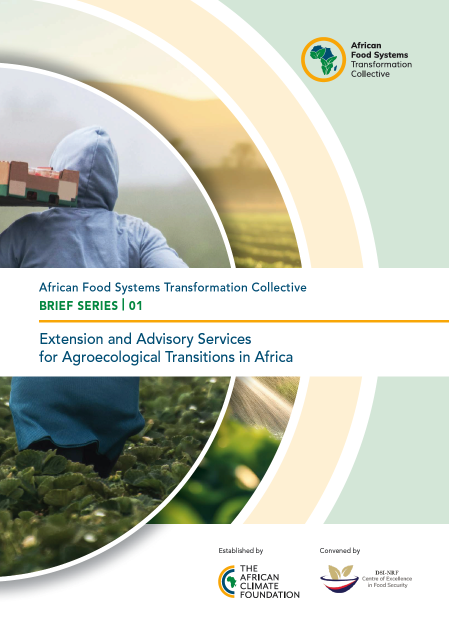
African food and agriculture systems continue to grapple with food insecurity in the face of climate change, land degradation and biodiversity loss. The present brief highlights the pivotal role that targeted extension and advisory services (EAS) can play in contributing to the transformation of Africa’s food systems and thus greater sustainability and social equity. Agroecology emphasises ecological integrity, social justice and the empowerment of local communities, enabling farmers to adapt to climate impacts while enhancing their livelihoods. Despite its potential, however, only about 30% of farms worldwide operate according to integrated agroecological principles. This is primarily due to insufficient dedicated funding for agroecology, inadequate training of extension workers, limited access to EAS, and the dominance of industrial–agricultural models. Agroecology-focused EAS could improve food security, bolster resilience, support biodiversity and foster social equity within rural communities. Achieving these goals would require building the capacity of extension workers to use agroecological principles effectively and to engage local farmers, markets and consumers, particularly women and youth, in the transition process. This brief calls upon development partners to rethink funding strategies in order to prioritise long-term, community-driven initiatives that align with the principles of agroecology. An integrated approach is essential for creating sustainable and inclusive agricultural systems across the continent.